

Sea Spiders
Pycnogonida
Identification, coral hosts, breeding cycle, treatment and prevention
Written by Christian, Signature FragsLast reviewed:
What Are They
Sea spiders are marine arthropods belonging to Pycnogonida, also known as Pantopoda. They are distinct from land spiders. This guide covers coral-associated sea spiders, with particular attention to the zoanthid and Acanthastrea-type pests reported in aquariums. “Sea spider” identifies a broad group, not one species or a universal coral predator. Confirm the animal, identify the coral involved and contain a suspected feeding problem before transferring material elsewhere.
A 2020 field study recorded ten sea-spider species from five families associated with intertidal Zoanthus colonies in Karachi, Pakistan, including the newly described Achelia karachiensis. The colonies provided shelter and food; the finding does not identify every aquarium spider as that species or demonstrate that all ten cause the same damage.
Sea-spider foods vary. A feeding review records use of corals and other invertebrates, as well as non-animal foods in some taxa. Finding a sea spider does not alone establish coral predation.
Which Corals Can They Affect
Assess the animal and coral together. The records below distinguish research findings from an aquarium report; they do not mean that the same sea-spider species feeds on every listed coral. Record the actual host rather than labelling every discovery a “zoa spider”.
| Coral or host group | Evidence | Meaning for the aquarium |
|---|---|---|
| Zoanthus | Field study: ten associated species; colonies offered shelter and food. | Association is established. Identify recovered animals; not every associated species has the same feeding impact. |
| Palythoa and Protopalythoa | Published feeding records: Endeis mollis on Palythoa caesia; E. biseriata on Protopalythoa sp. | These zoanthids can be hosts. Do not assume a hobby “paly” is immune or that the aquarium spider is a named Endeis species. |
| Acanthastrea-type corals sold as acans | Original aquarium report of spiders recovered from an “Acanthastrea” frag; coral and spider species unconfirmed. | Treat as a credible aquarium concern, with lower certainty than a controlled host-specific study. |
| Fire corals such as Millepora | Endeis mollis feeding on Millepora exaesa is recorded. Millepora is a hydrozoan. | A record on fire coral does not demonstrate feeding on Acropora or Montipora. |
| Certain soft corals | Published Antarctic records include Colossendeis feeding on Alcyonium and Clavularia. | These particular records do not establish a pest threat to every tropical aquarium soft coral. |
| Other LPS and SPS corals | Host range for unidentified aquarium spiders remains unresolved. | Investigate an actual animal and progressing damage. This guide does not establish universal feeding on Acropora, Montipora or Goniopora. |
Anemones and hydroids can also be prey or developmental hosts for some sea spiders. They are separate host groups, not evidence that every coral-associated spider can use them.
If the coral is sold under a hobby name such as “acan”, photograph it and record its scientific identity if known. Do not convert an old Acanthastrea-labelled observation into a confirmed Micromussa species record without identification.
Identification
Look for a small central body, jointed walking legs and an anterior feeding tube called a proboscis. Most sea spiders have four pairs of walking legs. Additional appendages around the front can make the leg count confusing; some groups differ from the usual eight-legged form. Colour and size alone are insufficient for species identification.
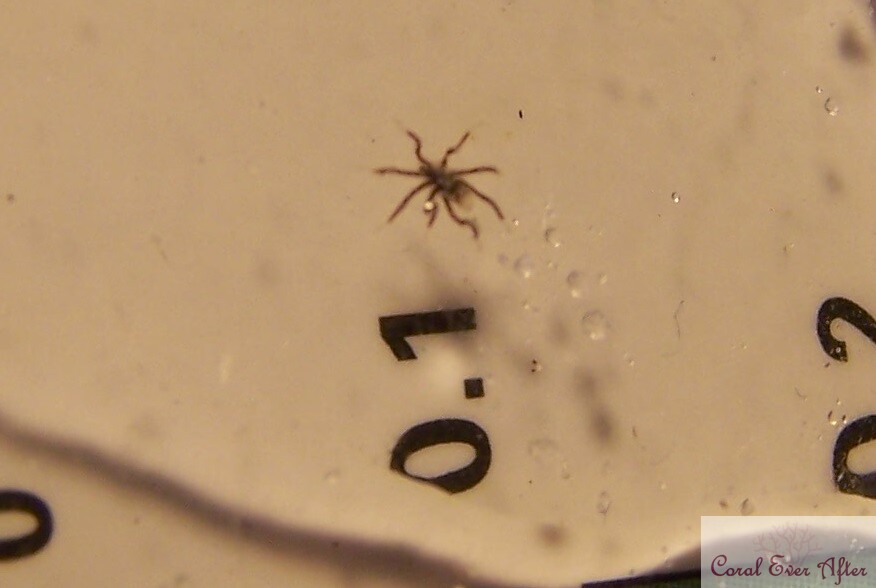
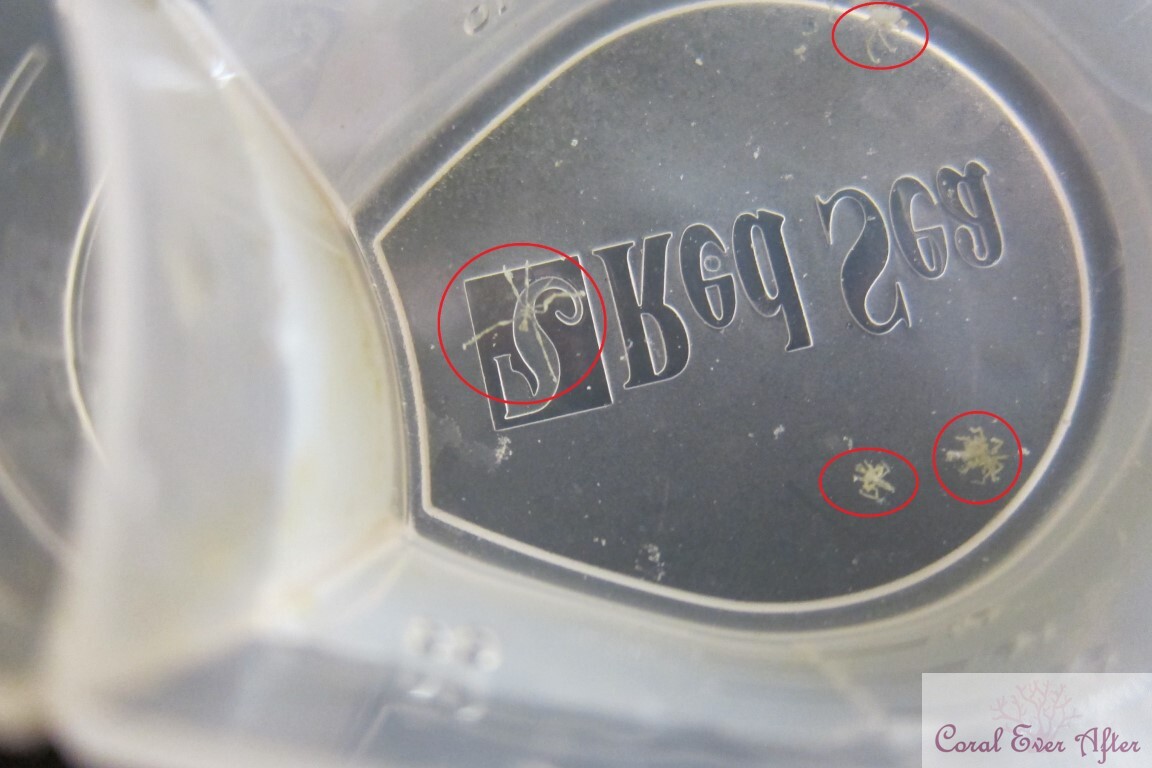
One aquarist documented zoanthid-associated spiders about 3–5 mm across and Acanthastrea-associated spiders about 1 cm across, recovered during dipping. Those reported leg spans are not universal sizes, and the animals’ species were unconfirmed.


- Use white light and a magnifier or macro camera. Record the animal’s body and legs rather than relying on its appearance under blue lighting.
- Inspect between polyps, around the mouth and stalk, beneath the colony and around the plug or rock attachment.
- Look for an independently moving animal. Jointed legs distinguish a sea spider from a slug-like pest or the coral’s own tentacles.
- Record the host, approximate leg span, date and location. A clear photograph with a scale is useful when seeking expert identification.
What Does the Damage Look Like
Pycnogonids use a proboscis to take in food, predominantly liquid material. Affected colonies warrant close inspection for feeding animals, but there is no single visible injury that confirms a feeding sea spider.
For practical monitoring, record persistently closed or poorly extending polyps, shrinking polyps and actual tissue loss. Compare photographs of the same area over time. Treat these as reasons to investigate, not as proof of infestation or a prediction of how quickly a colony will die.
- Check whether only particular polyps are deteriorating or whether the entire colony changed after a lighting, flow or water-quality disturbance.
- Distinguish intact, retracted polyps from missing or damaged tissue.
- Inspect for other pests as well as sea spiders. More than one problem can occur on the same colony.
- Review recent handling, sediment, stings and aquarium stability before assigning every closed polyp to a pest.
Discovery and Identification
Coral Rx’s spider article describes animals hiding inside closed polyps, sometimes with legs visible outside. This is aquarium guidance rather than proof that the larval development of every zoanthid-associated species occurs inside the polyp.
Transfer a suspect colony into an independent, shallow inspection vessel of matched seawater. Keep it submerged, inspect all accessible surfaces, and use gentle water movement to reveal hidden areas without tearing the polyps. Examine any dislodged material under magnification against both light and dark backgrounds.
Collect the whole animal with a pipette or fine forceps where possible. If only detached legs are recovered, continue looking for the body. Ask for experienced identification when the image is unclear; “suspected pycnogonid” is more accurate than an unsupported species name.

Recognising the body and legs
Representative adult Colossendeis australis. The labelled proboscis (pr), oviger (ov) and four pairs of walking legs illustrate sea-spider anatomy. This is a named research specimen, not a confirmed aquarium zoanthid pest.
Handling zoanthids safely
When the affected material includes zoanthids or Palythoa, palytoxin precautions are essential. Keep colonies submerged during transfer and inspection, use suitable aquarist gloves, eye protection and the respiratory protection advised by OATA, and keep other people away from the work area. Do not use hot or boiling water, steam, microwaving or vigorous spraying and brushing to clean colonies or their rock. Seek urgent medical attention if exposure is suspected and tell the clinician that palytoxin may be involved.
Eggs
In sea spiders, fertilized eggs are generally carried in packages on special appendages of the male called ovigers. Some males also retain offspring after hatching. Inspect the underside of a recovered animal, not just the coral or plug. Do not assume that a spiral egg ribbon on a zoanthid is a sea-spider egg mass.


For containment, collect an egg-bearing animal intact and keep its attached material in the removal vessel. If a suspicious cluster is found on the coral, photograph it before removal and identify it separately. A cluster may belong to another hitchhiker or pest.
A clear dip container does not establish that every hidden stage has been removed. There is no demonstrated, species-specific egg-killing protocol for the unidentified aquarium spiders addressed here. Physical collection and continued observation therefore remain separate tasks from dipping.
Understanding the Breeding Cycle
Published work distinguishes several developmental pathways across Pycnogonida. Many hatch as a protonymphon larva that differs markedly from an eight-legged adult; others hatch at a more advanced stage. Juveniles develop through successive moults. Larval association with a host varies, and internal development demonstrated in certain hydroid-associated species must not automatically be claimed for zoanthid pests.
A practical timetable requires a confirmed species and observations at the relevant aquarium temperature. The evidence reviewed does not supply a reliable hatch-to-maturity interval or complete generation time for an unidentified zoanthid infestation. A weekly dip or a three-week observation period must not be described as a proven life-cycle interruption.
| Stage or question | Evidence and practical meaning |
|---|---|
| Egg-bearing adult | Check the recovered animal for attached brood; retain it intact. General brood biology does not provide an aquarium hatch date. |
| Larval and juvenile stages | Use magnification and preserve uncertain specimens for identification. A small early stage need not resemble an adult. |
| Time to sexual maturity | Not established here for the aquarium pest. Do not stop monitoring on an invented maturity deadline. |
| Dip frequency | No proven universal interval. Base intervention on repeated findings, the product label and coral tolerance. |
| Host-free clearance | No validated duration for the unidentified animal. Removing zoanthids does not prove that every potential food or host is absent. |

Young stages can look different
Advanced postlarval offspring retained on a male Nymphon micronesicum. This illustrates one developmental pathway; it is not a photograph of confirmed zoanthid-spider babies.
Immediate Containment
The following is a conservative husbandry response, not an experimentally validated eradication protocol. Stop selling, trading or transferring suspect corals while the problem is assessed. Give the affected colony independent quarantine with appropriate temperature, salinity, light and circulation; another rack on the same connected system is not isolation.
- Inspect other colonies of the affected coral type, as well as corals, rubble or equipment recently moved with that material.
- Use dedicated inspection containers and tools. Keep removed animals, debris, dip water and rinse water out of every connected coral system.
- Separate newly arriving corals from the affected group so that new arrivals do not obscure the follow-up record.
- Record the first finding, number removed, colonies inspected and subsequent observations.
If a colony is fixed to a large rock, plan a safe removal route rather than scraping live polyps from it in the display. Do not heat, dry or aggressively brush zoanthid-covered rock as a shortcut. Use the handling precautions above and obtain experienced help where removal cannot be performed safely.
Treatment
Physical removal
Manual collection is the most direct way to remove a visible animal. Coral Rx’s own spider guide emphasizes physical removal and warns that chemical treatments can fail to reach sheltered spiders.
Work outside the display with the colony submerged. Use magnification and a pipette or fine forceps to lift accessible animals without squeezing the polyps. Examine the removed animal for attached brood. Recheck sheltered surfaces and the inspection water after each removal; a single recovered spider should prompt a wider search, not immediate clearance.
Do not cut open apparently healthy polyps simply to search for larvae. If an animal cannot be reached without significant damage, maintain isolation and arrange expert help. For a severely compromised colony that cannot be inspected or treated effectively, controlled disposal may be preferable to repeatedly transferring risk; follow the zoanthid safety and disposal guidance in reference 8.
Coral dips as a supporting measure
The documented Coral Rx removal from zoanthids is an observation, not proof of mortality or eradication. The same account’s peroxide preference for acan-associated spiders must not become a zoanthid protocol.
Use a preparation labelled for the coral concerned, in a separate vessel, following the current instructions for the exact formulation. A dip tolerated by an acan cannot automatically be treated as suitable for a zoanthid, SPS or other coral. Do not strengthen the mixture or prolong exposure because no spider has fallen off. Product instructions and coral tolerance take precedence over a generic internet recipe.
For context, Coral Rx’s February 2023 general instructions specify 20 mL per US gallon for its standard formulation, with a 10–15 minute exposure, circulation and a clean seawater rinse. Pro and Industrial use different drop-based instructions. These are manufacturer directions, not a spider-specific cure; check the current bottle before use. Never reuse the mixture or dose it into the display or quarantine system.
Match the inspection, dip and rinse water to the coral’s temperature and salinity. Gently inspect while dipping and collect visible animals directly. Return the coral to independent quarantine after rinsing. Record the exact product, measured dose, duration, pest findings and the coral’s response.

Repeated inspection rather than a promised chemical cure
Continue removal and inspection when new findings occur. Dipping more often is not automatically better: repeated handling can damage a stressed colony and make its condition harder to interpret. Choose further dips according to the label, confirmed pest findings and coral tolerance, with experienced advice if the colony is declining.
A dip that releases animals is useful evidence of infestation. A dip that releases nothing is weaker evidence of absence. Continue checking the coral itself; disappearance from the dip water and confirmed eradication are different conclusions.
Whole system treatments and experimental chemicals
No controlled, species-specific whole-system eradication study was identified in this review for the unidentified coral-associated aquarium spiders addressed here. Do not transfer an Acropora red-bug medicine, a flatworm treatment or a nudibranch regimen to these animals on the assumption that it will work.
Freshwater, peroxide, concentrated iodine, agricultural insecticides and veterinary medicines are not interchangeable coral dips. This guide does not assign them an improvised concentration or exposure time. Obtain an appropriate coral-specific or veterinary assessment before considering a treatment outside the product’s intended use.
Biological Pressure
A fish picking at a coral does not prove pest predation. The aquarist report establishes no dependable natural control.
Do not purchase a wrasse or other predator as an eradication guarantee. Existing compatible fish may warrant observation, but any apparent reduction in visible spiders should be evaluated alongside direct coral inspections. Biological pressure does not replace quarantine, manual collection or follow-up.
Follow Up
Make a brief visual check each day during active containment, with more detailed magnified inspections when practical and without unnecessary daily handling. This is a monitoring recommendation, not a biologically validated treatment interval. Check more urgently if additional polyps deteriorate or another animal is seen.
- Photograph the same colony areas so that apparent improvement can be compared fairly.
- Record animals or suspicious brood found, the location on the colony and any intervention.
- Check both the affected colony and associated material. A reassuring view of the upper surface leaves sheltered areas unresolved.
- If a new animal is found, reassess removal and containment. Do not continue counting a clean observation period as though the finding never happened.
Quarantine and Host Removal
Keep suspect and confirmed material in independent quarantine until the assessment is convincing. Provide stable husbandry suited to the affected coral rather than adopting a single zoanthid care regime for every host. A poorly maintained holding vessel can cause unrelated losses. Keep equipment dedicated and avoid introducing uninspected material into the quarantined group.
Removing the affected host reduces access to those colonies, but does not establish a guaranteed starvation period. Different foods and stage-specific hosts occur within Pycnogonida. The unidentified animal’s requirements must not be assumed; removing zoanthids alone is not a universal sea-spider clearance method.
Replacement plugs or removal of accessible non-living attachment material can improve inspection, but neither guarantees that hidden animals are absent. For zoanthid hosts, avoid damaging the live polyp mat simply to perform the same base-removal procedure used for a branching stony coral.
Final Clearance and Reintroduction
Judge readiness by repeated independent inspections, absence of further findings and a recovering colony, while acknowledging that these are practical criteria rather than a validated test. There is no evidence-based universal date on which every coral-associated sea-spider infestation can be declared cleared.
- Inspect the complete accessible colony, attachment material and quarantine surroundings under magnification.
- Review the record for new animals, attached brood and continuing damage; investigate unresolved findings.
- Confirm that the colony is tolerating normal husbandry and that deterioration has stopped.
- If an additional confirmation dip is appropriate, follow its label and inspect what is collected. A negative result adds information but cannot certify that no hidden stage remains.
Reintroduce only when the accumulated observations justify the risk, and continue observation afterwards. Do not describe a coral as proven pest-free solely because one dip was clear or a predetermined number of days has elapsed.
Coral Recovery
Once feeding animals have been removed, give the colony stable conditions and time to recover. Reopening may be uneven and does not on its own establish clearance. Avoid abrupt light, flow or chemistry changes and unnecessary repeated treatment of a colony that is improving.
Document new growth and stable polyp condition alongside pest checks. If damage continues without further animals being found, revisit water quality, other pests, mechanical injury and disease rather than escalating treatment indefinitely.
Prevention
- Buy from sources that can explain their coral inspection and quarantine practices.
- Inspect arrivals under magnification before they reach the established collection, including sheltered areas and attachment material.
- Use a suitable labelled coral dip where appropriate, followed by independent quarantine and repeated observation.
- Keep inspection equipment separate and never return transport, dip or rinse water to the coral system.
- Do not trade or sell suspect colonies. Disclose previous findings rather than letting another keeper assume a single dip proved clearance.
Good colour and open polyps are reassuring observations, but they do not replace inspection. Prevention depends on the entire intake process, not on a bottle alone.
Signature Frags Perspective
A useful pest guide should help the keeper make an accurate decision before treatment. With sea spiders, identify both the animal and the coral involved, contain a suspected feeding problem, remove pests where possible and keep a clear follow-up record. The strength of that process matters more than an unsupported promise of rapid eradication.
Christian’s Take
If a coral starts staying closed or losing tissue, I’d want to know why before reaching for a treatment. Look closely between the polyps and around the base, and use magnification. If you find a sea spider, record which coral it was on, isolate a suspected feeding problem, remove the animal and check it for eggs. Then keep a proper record and keep checking. Don’t assume a spider found on a zoa behaves exactly like one found on an acan. A dip can help you find pests, but one clear dip is not the finish line. Be methodical, protect the coral from unnecessary damage and give it stable conditions to recover.
References and Evidence Notes
Research reviewed 3 October 2026. References 1–4 establish field associations and general biology; reference 5 is an original aquarium observation; references 6–7 are manufacturer guidance; reference 8 provides handling advice. Unnumbered management passages are conservative recommendations, not tested species-specific eradication results.
George, Z., Siddiqui, G., George, N. & Lucena, R.A. (2020). A new species of Achelia (Pycnogonida: Ammotheidae) and first records of intertidal sea spiders found on Zoanthus (Cnidaria: Zoantharia) from Karachi, Pakistan. Zootaxa 4821(2):371–393. DOI 10.11646/zootaxa.4821.2.9. Publisher abstract reviewed; the restricted full text was not used to infer additional species-specific feeding results.
Dietz, L., Dömel, J.S., Leese, F., Lehmann, T. & Melzer, R.R. (2018). Feeding ecology in sea spiders (Arthropoda: Pycnogonida): what do we know? Frontiers in Zoology 15:7. DOI 10.1186/s12983-018-0250-4. Full-text research review; includes the named zoanthid feeding records reported by Arango (2001).
Brenneis, G., Bogomolova, E.V., Arango, C.P. & Krapp, F. (2017). From egg to “no-body”: an overview and revision of developmental pathways in the ancient arthropod lineage Pycnogonida. Frontiers in Zoology 14:6. DOI 10.1186/s12983-017-0192-2. Full-text developmental review; general brood care and stage diversity, not an aquarium zoanthid-pest timetable.
Arango, C.P. Sea Spiders. Australasian Arachnological Society. Authored specialist account of pycnogonid morphology and reproduction. Used for identification and brood care; broad older statements about larval dispersal are not treated as universal.
reefdup (2021; updated 2022). Identification of Sea Spiders. Coral Ever After. Original aquarium observations on zoanthid- and Acanthastrea-associated spiders; species unconfirmed.
Coral Rx (7 February 2023). Zoanthid Eating Spiders. Manufacturer pest article reporting concealment in polyps and limitations of chemical treatment. Includes anecdotal material; its claim that sexual reproduction limits outbreaks is not used as a reassurance.
Coral Rx (7 February 2023). Effectively Dip Corals in Coral Rx. General preparation, exposure, rinse and quarantine instructions. These directions do not validate spider or egg eradication. Check the current label for the exact formulation.
Ornamental Aquatic Trade Association. How to avoid palytoxin poisoning if you keep corals. Guidance developed with specialist and public-health input. Applies to safe zoanthid handling, transfer, disposal and suspected exposure.
Evidence limits that affect the protocol
- The hobby name does not specify a single identified species; host association alone is insufficient for a species diagnosis.
- No controlled, species-specific commercial dip, egg-killing or whole-system eradication protocol was identified for these unidentified aquarium animals.
- No guaranteed quarantine duration, hatch-to-maturity deadline or host-free clearance period is established here.
- Egg packages carried by males must not be confused with a different pest’s egg ribbon on the coral.
- A sea-spider research image may illustrate general biology without documenting the aquarium pest addressed by this guide.
Image Credits
Background supplied by Signature Frags, reused from the established Goniopora care and pest-guide layout.
Zoanthid- and acan-associated aquarium photographs: reefdup, Coral Ever After, Identification of Sea Spiders (2021; updated 2022). Species and age unconfirmed. Detail crops retain the selected whole animals; the acan inspection photograph is also shown in full. Original files: zoanthid photograph and acan photograph. © Coral Ever After. These photographs are included in this unpublished draft for review; permission for website publication has not yet been confirmed.
Anatomy, egg packages and advanced postlarvae: Georg Brenneis, Ekaterina V. Bogomolova, Claudia P. Arango & Franz Krapp (2017), From egg to “no-body”, Frontiers in Zoology 14:6, Figure 1A, C, D and E. Creative Commons Attribution 4.0. Cropped to the original panels, preserving labels and brood details. Each named species is a representative biology reference; none is presented as a confirmed zoanthid-eating aquarium specimen.
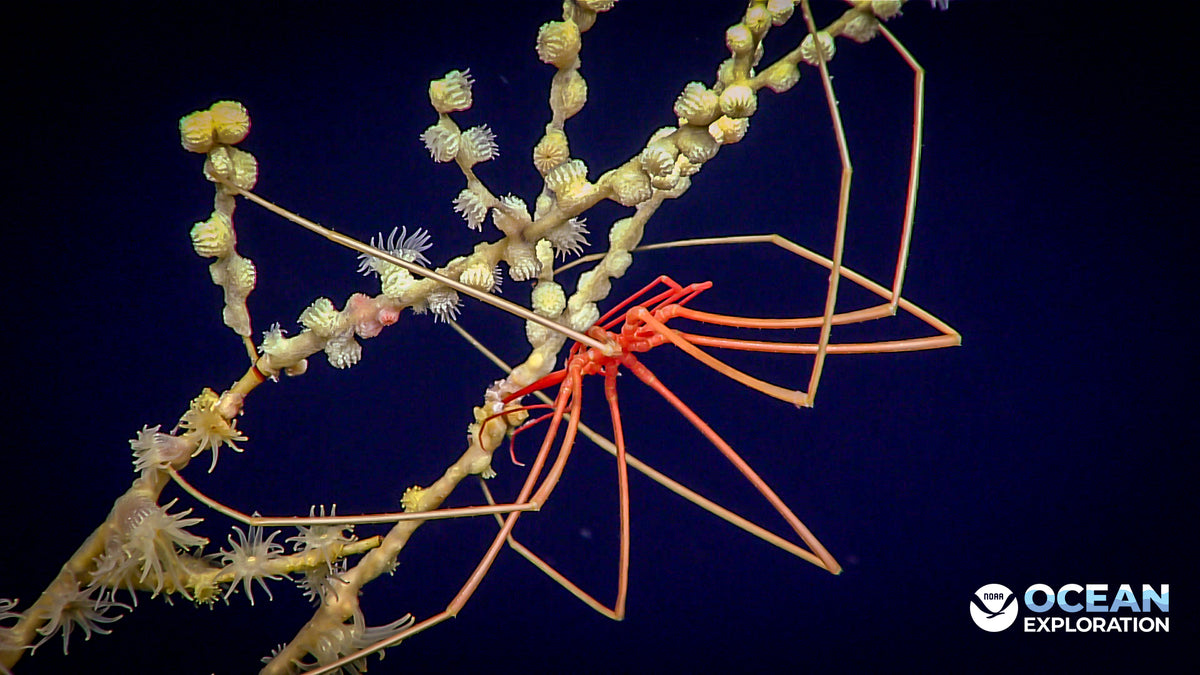
Deep-sea photograph: NOAA Ocean Exploration, 2021 North Atlantic Stepping Stones, Congress Seamount, 2,623 m depth. Full original image retained, including its credit mark. Public domain under NOAA’s media-use guidance. This contextual image does not demonstrate feeding or identify a tropical aquarium pest.
More from the Coral Pest Library
Coral-eating snails — Drupella →
Montipora-eating nudibranchs →
Goniopora-eating nudibranchs →
Explore Pests & Problems