


Aiptasia and Majanos
Pest anemones in reef aquariums
Identification, targeted treatments, natural predators and prevention
Written by Christian, Signature FragsLast reviewed:
What Are Aiptasia and Majanos
Aiptasia and majanos are unwanted anemones that can arrive on coral plugs, rubble and live rock. They compete for space and can sting nearby corals. Identify which pest you have before choosing treatment: Berghia are specialist Aiptasia feeders and will not solve a majano infestation.
Our practical approach is to remove isolated introductions early, use a carefully targeted treatment where removal is impractical, and consider a suitable natural predator for an established Aiptasia problem. Check the whole system afterwards, including places that a fish or shrimp cannot reach. A disappearing anemone is encouraging; lasting control needs repeated inspection.
Recognising Aiptasia
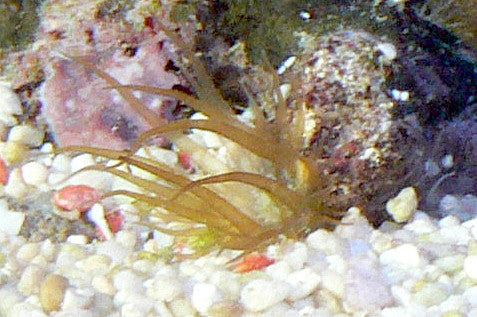
Look for a small translucent, tan or brown anemone with a slender column, a central mouth and numerous narrow tentacles. It can withdraw quickly into a crevice when disturbed. Aquarium “Aiptasia” can include Exaiptasia; scientific names in the photo captions retain the source identifications. Colour and size alone do not establish a species. [1, image sources]
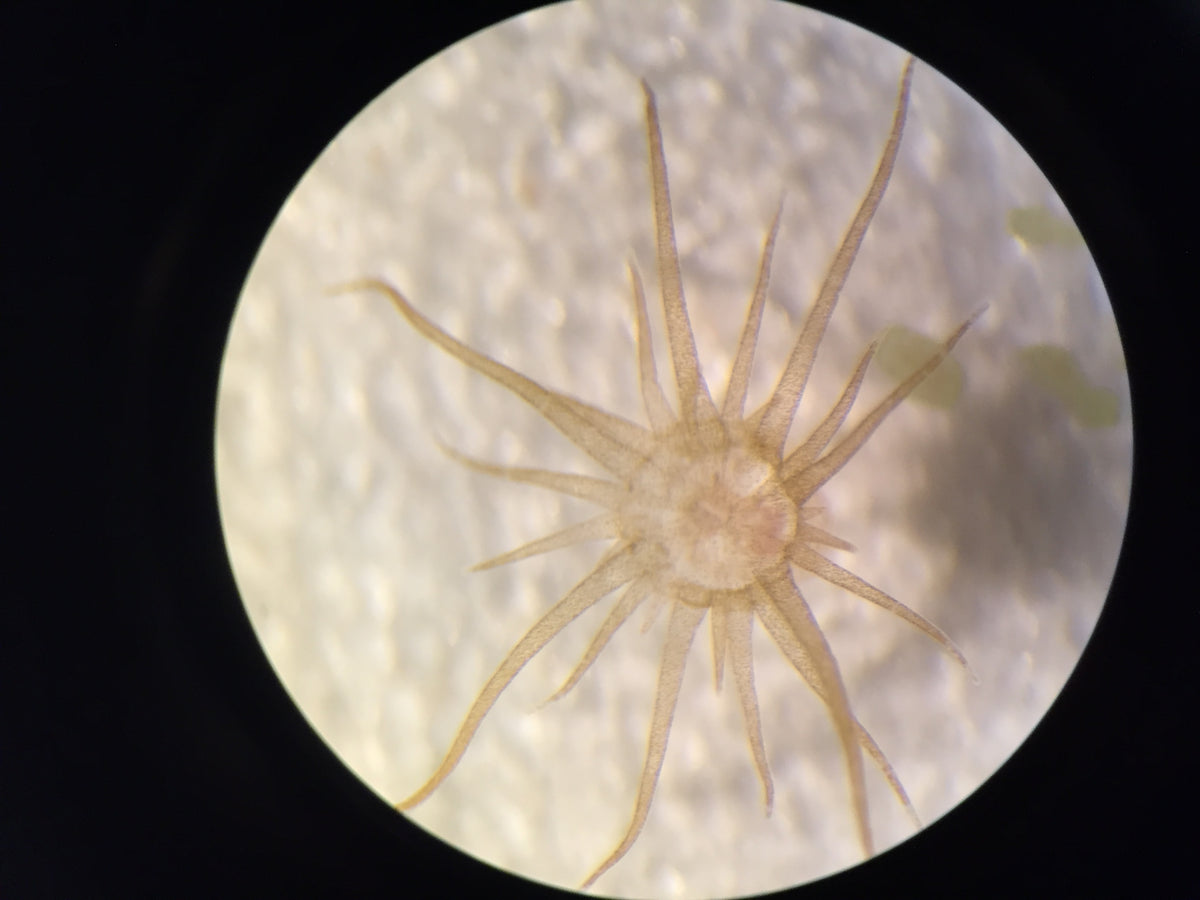

Inspect the undersides of plugs, rock joints, overflow teeth, weirs and accessible sump surfaces. Photograph an extended specimen before disturbing it. Do not mistake a tube-dwelling worm or a deliberately kept anemone for a pest because it has tentacles.
Recognising Majanos
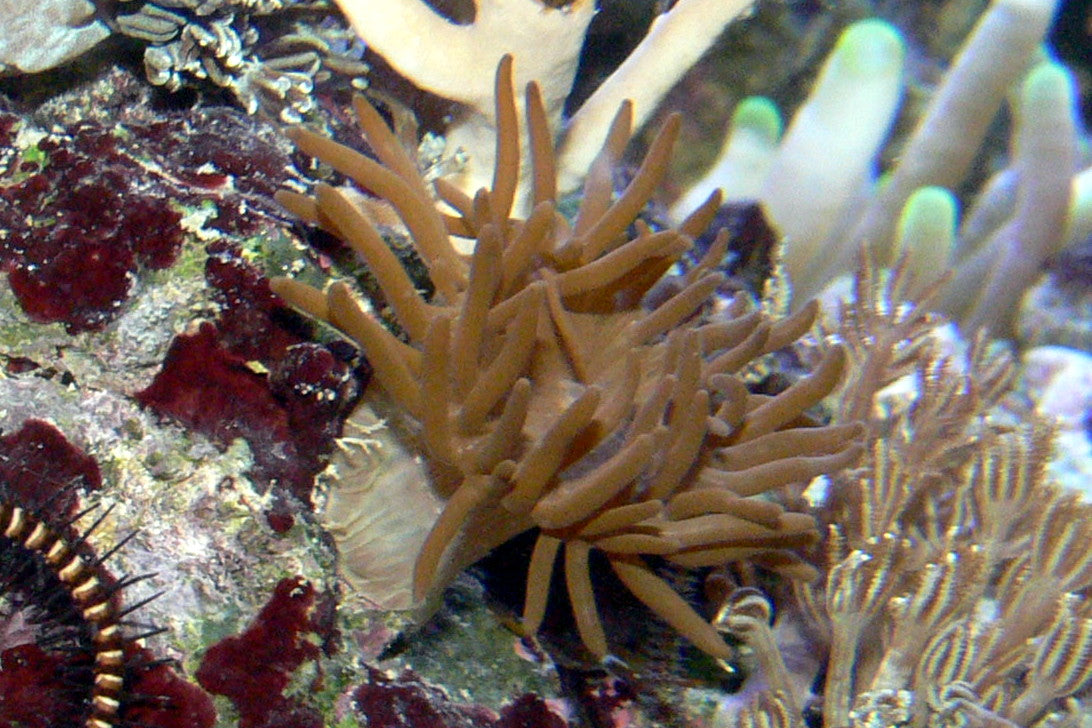
The aquarium name “majano” commonly describes compact pest anemones with shorter, plumper tentacles, sometimes with swollen tips. They may be green, brown or fluorescent under reef lighting. Appearance varies, and bubble-like tips do not distinguish them reliably from every desirable anemone. The close-up below is identified by its photographer as Anemonia cf. majano: “cf.” signals a qualified identification. [Image sources]
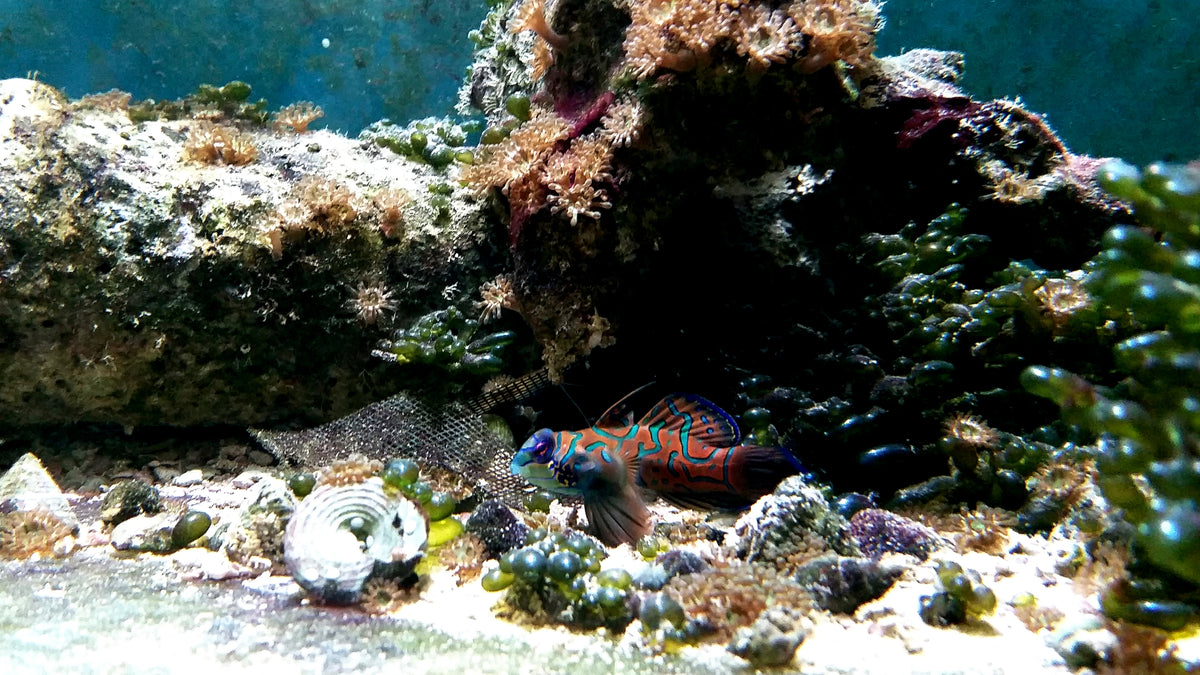
Confirm an unfamiliar anemone with a knowledgeable supplier before killing it. In the wider aquarium photograph, the brown anemones on the upper rock are context examples categorised as majanos by the source; the photograph does not provide species-level confirmation. The green bubbles are algae, and the mandarin fish is incidental; neither is an anemone control animal.
Damage and Spread
Watch for closed polyps or damaged tissue where an anemone touches a coral. Record the point of contact and check other possible causes, including unstable water conditions and nearby coral aggression. Remove the pest without coating the neighbouring coral in treatment.
Aiptasia can reproduce through pedal laceration, in which tissue left from the attachment area develops into new individuals. Tearing or scraping an animal in the display can leave viable remnants. This is why treating only the visible tentacles, or pulling off the top, can be followed by another outbreak.
Finding fresh anemones after treatment can mean hidden survivors, regrowth or another introduction. It does not establish that a product caused spawning. Treat the attached base and keep checking the original area. Avoid sharing infested rock or plugs between systems.
Before You Treat
- Identify Aiptasia, majano or another animal. Mark the affected locations and photograph them.
- Check plugs and removable rubble first. An infested plug may be easier to replace than to treat inside a packed reef.
- Read the current label, dose limits and flow instructions for the exact product. Check access to the mouth and attachment site.
- Have a way to protect nearby coral tissue and collect dislodged material. Work on removable items in an independent container of aquarium water.
- For chemical treatment, record the starting pH and treat a small area first. Maintain livestock oxygenation during any instructed flow pause.
- For a predator, assess species, feeding, adult space requirements, quarantine and how you would remove it if it harms corals.
Choosing a Treatment
| Approach | Best fit | Main limitation |
|---|---|---|
| Remove the plug or attached substrate | Isolated Aiptasia or majanos | Retain the entire attachment area; avoid tearing tissue. |
| Labelled spot treatment | Accessible individual pests | Product can injure neighbouring livestock; repeat inspection is essential. |
| Calcium hydroxide paste | Experienced, carefully controlled spot treatment | Strong alkalinity and pH effects; no universal aquarium dose. |
| Berghia stephanieae | Established Aiptasia with suitable conditions | Does not eat majanos; vulnerable to predators and starvation. |
| Verified peppermint shrimp | Aiptasia, especially smaller animals | Species and individual behaviour matter; unsuitable with a Berghia plan. |
| Selected fish | Aiptasia in a system suited to that fish | Coral nipping, feeding demands and variable pest consumption. |
| Laser or electrical probe | Accessible targets assessed by an experienced operator | Access, incomplete destruction and equipment hazards limit usefulness. |
For majanos, start with removal of the attached substrate or a product explicitly labelled for them. A predator sold for Aiptasia does not establish majano control. In a mixed infestation, keep separate counts and assess the outcome for each pest.
Commercial Spot Treatments
Aiptasia X
Red Sea describes Aiptasia-X as an adhesive treatment delivered gently at the oral disc so that the anemone ingests it. Its instructions specify switching off circulation before application and leaving it off for about 15 minutes afterwards. Follow the current instructions supplied with your bottle, including dose and application limits. Keep the applicator away from healthy coral tissue.
Aiptasia-X should not be described as calcium hydroxide mixed with RO/DI water. Red Sea’s published safety sheet lists calcium chloride and sodium hydroxide. That sheet is not a complete manufacturing recipe. The manufacturer’s “implosion” and reproduction-prevention statements are product claims, not a guarantee that every hidden anemone in a reef will be eliminated.
Other commercial products
Other thick spot treatments, including products sold as F-Aiptasia and Joe’s Juice, have their own formulations and directions. Check the original packaging rather than copying an Aiptasia-X schedule. Use only a product whose current label covers the pest being treated, and follow its curing, flow, clean-up and reapplication directions. Do not infer identical ingredients from a white appearance or add chemicals to a proprietary bottle.
Treat a manageable number, record the amount used, and inspect neighbouring corals when circulation resumes. If livestock react badly or pH rises unexpectedly, stop treatment, restore normal circulation and oxygenation, and assess the water before continuing. “Reef safe when used as directed” does not mean safe to pour over a reef.
Calcium Hydroxide Paste
Kalkwasser paste is calcium hydroxide mixed with RO/DI water to make a concentrated alkaline paste. Local contact can destroy anemone tissue; it can also burn coral tissue and add calcium and alkalinity to the aquarium. It is a separate homemade method, not the confirmed recipe for Aiptasia-X. Alkaline injections are among the approaches described in NOAA’s aquarium guidance, with variable success.
Do not extrapolate a spoonful or syringe volume from somebody else’s aquarium. Water volume, paste strength, total treatment amount and existing pH affect the outcome. A labelled spot treatment provides clearer operating instructions. If using calcium hydroxide, use appropriate chemical protection and a controlled, conservative plan; monitor pH and avoid treating a large infestation in one session.
Potassium Hydroxide and Stronger Alkalis
Potassium hydroxide is a strongly caustic alkali. Adding it to calcium hydroxide paste introduces another source of hydroxide and can make the mixture more aggressive, but greater causticity does not establish safe or complete pest eradication. It also changes the potassium and alkalinity input. No validated aquarium mixing ratio or treatment dose for that combination was established in the sources checked for this guide.
We therefore do not provide a potassium-hydroxide recipe or recommend adding it to Aiptasia-X. Concentrated alkalis can severely burn eyes and skin, and dissolving potassium hydroxide releases heat. Any specialist use needs a separate, professionally assessed chemical procedure and an aquarium-specific dosing assessment. A stronger mixture can damage the reef as readily as the pest.
Other Chemical and Heat Methods
Vinegar, lemon juice, acid preparations and hydrogen peroxide appear in aquarium discussions, as do hot-water injections. NOAA records acid, peroxide and vinegar approaches to Aiptasia with mixed results. Concentration, contact with the base and collateral exposure matter; there is no universal household-liquid dose adopted here. Avoid combining acids with alkaline products or switching rapidly between treatments without assessing the water.
These approaches can injure nearby coral tissue, affect water chemistry or leave the attachment site alive. We favour an established labelled product or complete removal of the infested substrate over improvising a stronger display-tank mixture.
Do not boil, microwave or pour hot water over live rock or zoanthid-bearing plugs. OATA identifies those activities as palytoxin exposure risks where Zoanthus or Palythoa are present. Heating aquarium rock is not an appropriate general pest-control shortcut.
Physical Removal and Sealing
For an isolated pest, remove the whole plug or the small piece of substrate carrying its base. Keep the item in a separate container while working so fragments cannot circulate through the display. If saving the coral, consider transferring healthy coral tissue to a clean plug without the infested attachment area. Do not cut through an unknown zoanthid colony casually.
Simply pulling, brushing, puncturing or scraping an anemone in the display may leave viable tissue. Sealing a small attachment site with aquarium-suitable adhesive or epoxy is a practical option only when the entire animal and its escape openings can be enclosed. A superficial cap over a crevice is unreliable. Do not cover living coral or a large rock surface, and reinspect the perimeter after curing.
A heavily infested removable rock may be better managed in an independent treatment system. Check its other livestock and biological filtration role before removal. Keep treatment water, tools and infested materials out of clean systems.
Lasers and Electrical Probes
Laser treatment aims to burn a visible anemone. In our treatment selection, it is a lower-priority option: the operator needs a clear view, while the attachment base may remain hidden in a crevice. Visible tissue damage is not evidence of permanent clearance. No controlled reef-aquarium comparison establishing a reliable clearance rate was located for this guide.
Powerful lasers also create direct and reflected-beam hazards around glass and water. FDA guidance identifies eye injury risks from Class 3B devices and additional reflected-beam, skin and fire risks from Class 4 devices. This guide provides no laser power settings or DIY operating procedure.
Electrical or electrolysis probes are a different method, mentioned in NOAA’s guidance. Use only purpose-built aquarium equipment under its current instructions. Do not improvise mains-powered probes, assume a laser safety procedure covers electrolysis, or regard either tool as a substitute for inspecting hidden pests.
Natural Control at a Glance
| Animal | Expected target | Reef and practical considerations |
|---|---|---|
| Berghia stephanieae | Aiptasia only | Specialist feeder; food exhaustion and predation need a plan. |
| Verified Lysmata peppermint shrimp | Aiptasia, often small individuals | Trade names are unreliable; do not assume majano control. |
| Copperband Chelmon rostratus | May consume Aiptasia | Feeding can be difficult; coral and invertebrate risk. |
| Filefish Acreichthys tomentosus | Often consumes Aiptasia | Some individuals ignore pests or nip hard and soft corals. |
| Klein’s and other butterflyfish | Individual-dependent anemone feeding | Broader coral feeding makes them a substantial reef risk. |
| Australian stripeys Microcanthus spp. | Reported Aiptasia consumption | Coral nipping, including SPS, remains a concern. Verify trade identity. |
Choose a predator that fits the aquarium and can be cared for after pest numbers fall. Quarantine fish and invertebrates appropriately, confirm prepared-food feeding where relevant, and plan capture or rehoming before introduction. Do not starve an animal to force it to eat anemones. Several predators together can interfere with one another, especially where Berghia are involved.
Berghia Nudibranchs
Berghia stephanieae is the specialist nudibranch commonly cultured for Aiptasia control. It does not eat majanos. Research on this species also shows that retained algal cells do not provide a lasting substitute for its prey; reef lighting will not sustain it after its food disappears.
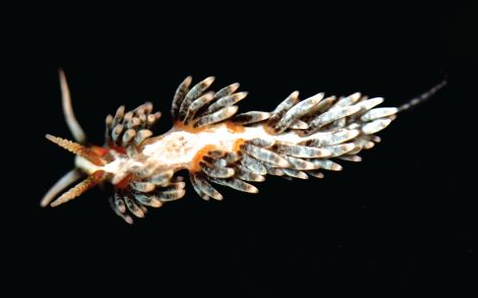

Ask the breeder to assess the infestation, distribution of prey and suitable stocking for your system. Follow its acclimation instructions and place these delicate animals near accessible Aiptasia, without dropping them into the anemone’s mouth. Progress can be gradual and hidden animals can be difficult to observe.
Review possible predators before introduction. The breeder reports risks from rock-hunting fish and scavenging shrimp, including peppermint shrimp. A tank with both does not constitute two independent layers of Aiptasia control. Where those risks cannot be managed, use another approach.
Plan for declining food before the last visible Aiptasia disappears. If possible, carefully collect surviving Berghia and transfer them to an already-infested suitable system or arrange responsible rehoming. Transfer the animals with minimal water, rather than moving infested rock between systems. A later recurrence may need reintroduction, but treat an isolated new pest promptly rather than deliberately growing an outbreak to feed a replacement population.
Choosing Peppermint Shrimp
Ask for a traceably identified Lysmata boggessi from a reliable supplier, ideally with demonstrated Aiptasia feeding. “Peppermint shrimp” covers several Lysmata species. A 2017 study identified the shrimp sampled from its surveyed southeastern US shops as L. boggessi, illustrating the identification problem; it did not prove that every peppermint worldwide is that species or that only this species can eat Aiptasia.
Lysmata wurdemanni and other species occur in the trade. Earlier feeding work used names predating later taxonomic revisions, so a historical “wurdemanni” label is not decisive. Ask for the scientific name and provenance rather than relying on red stripes. ORA reports peppermint control particularly of small developing Aiptasia. This is not a promise that a shrimp will tackle every large animal or eat majanos.
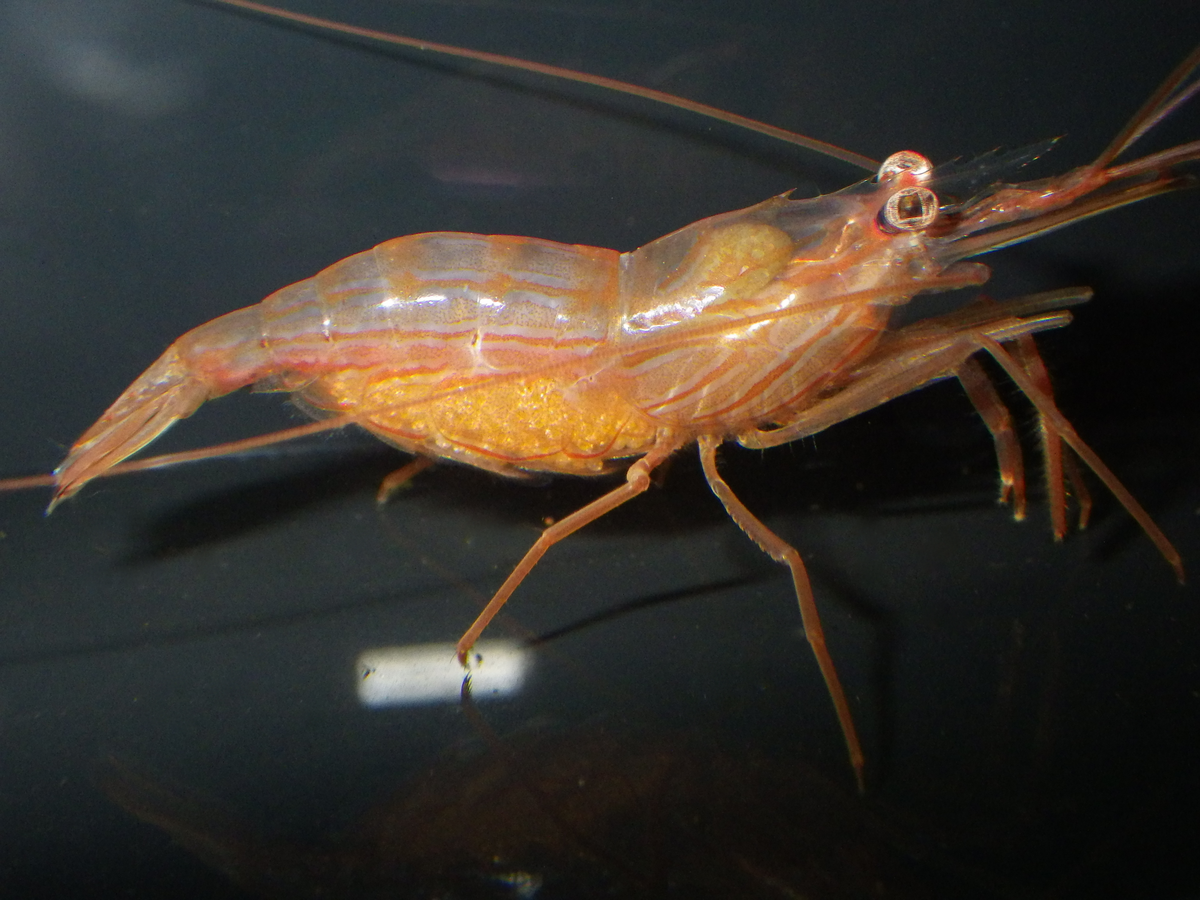

Camel or hinge-beak shrimp such as Rhynchocinetes durbanensis are a different group. Their pronounced hump and bold red-and-white pattern help flag the look-alike, but photographs alone cannot verify every Lysmata species. The peppermint photograph here is identified as L. boggessi by its photographer; that caption is not a taxonomic test.
Keep the shrimp fed and watch the actual behaviour around corals and anemones. Investigate persistent tissue picking or food theft from corals rather than assuming all shrimp sold under this name are interchangeable. They may become prey for existing fish, and they should not be combined casually with a Berghia programme.
Fish Used for Anemone Control
Copperband Butterflyfish
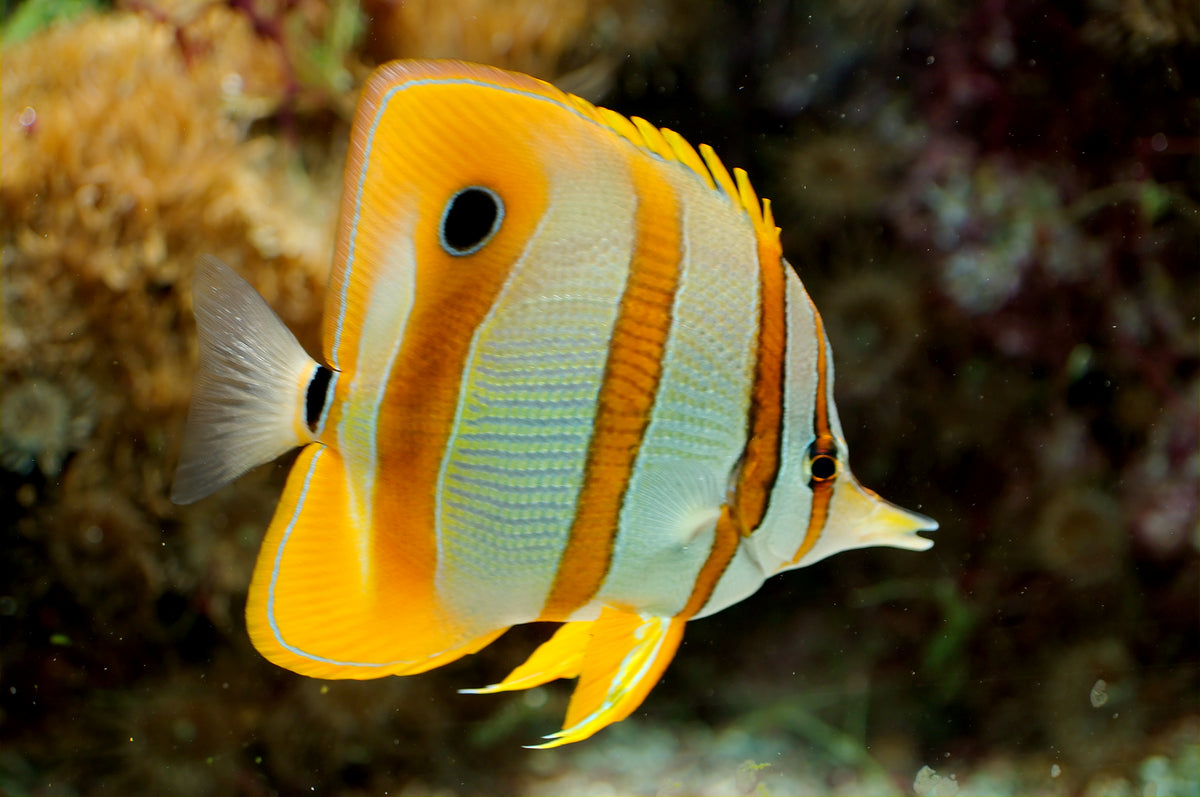
Chelmon rostratus may eat Aiptasia, but it is a demanding choice where feeding is uncertain. Confirm that the individual eats suitable foods and that the aquarium supports it long term. LiveAquaria lists reef compatibility with caution. Watch for coral or invertebrate picking and have a capture plan. An individual that ignores pests still needs a proper diet.
Aiptasia Eating Filefish
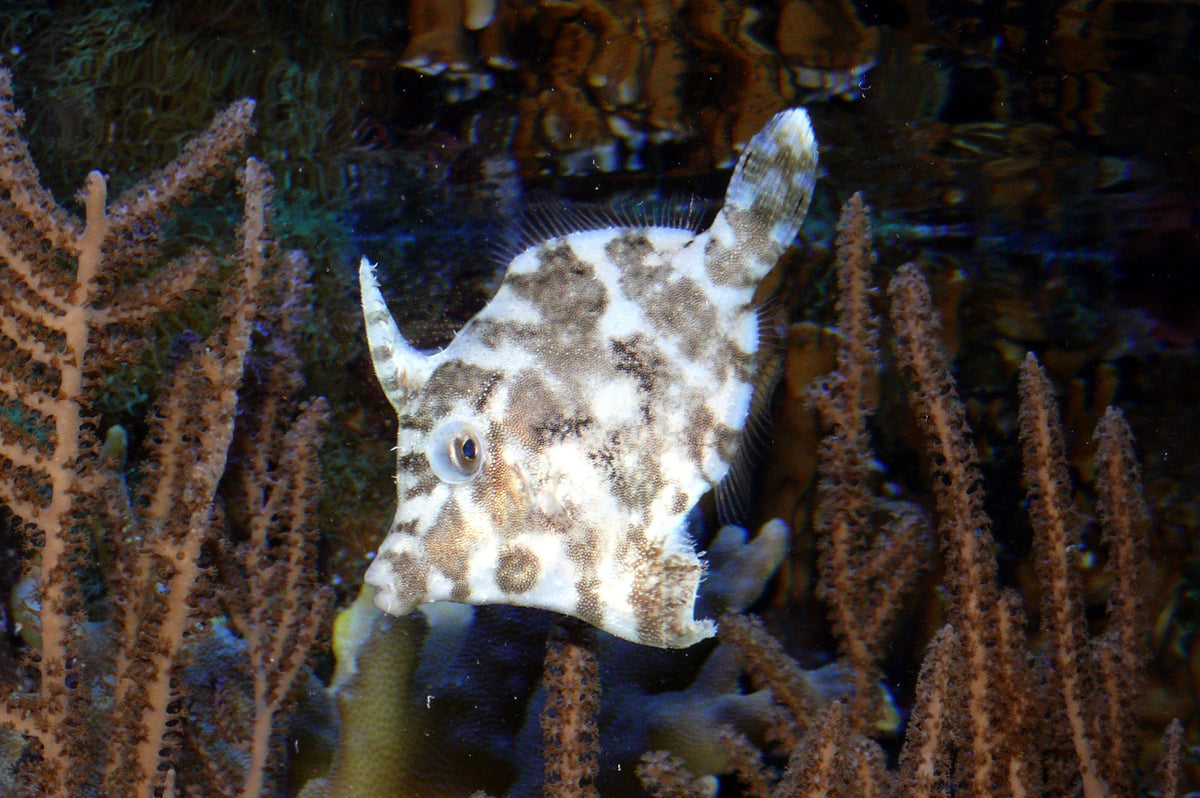
Acreichthys tomentosus is the relevant commonly cultured species; “filefish” alone is insufficient identification. ORA reports that many eat Aiptasia, some take time and occasional individuals do not. It also reports nipping of both hard and soft corals. Continue prepared-food feeding and remove an individual causing coral damage. Do not promise majano clearance from the Aiptasia-eating name.
Kleins and Other Butterflyfish
Klein’s butterflyfish, Chaetodon kleinii, is often discussed for pest-anemone control, but coral feeding is a material risk. Supplier assessments differ: Biota describes caution with corals, while LiveAquaria lists it as not reef safe. Raccoon butterflyfish, Chaetodon lunula, is also listed as unsafe with corals. These fish belong in a system designed for their needs; they are not general recommendations for an SPS display or guaranteed majano predators.

Australian Stripeys
Australian stripeys are Microcanthus fishes commonly traded as M. strigatus. Reports describe Aiptasia consumption, but coral nipping, including SPS, remains a concern. Australian Microcanthus populations also appear under M. joyceae and M. vittatus in modern accounts. Verify identity and origin with the supplier. The Japanese M. strigatus photograph below illustrates the group and is not proof of Australian origin.

For every fish option, check adult swimming space, tankmates, food requirements and compatibility before buying. Observe coral polyp behaviour as well as pest counts. Reduction achieved by a fish can represent ongoing suppression: inaccessible anemones may remain when the fish is removed.
A Practical Treatment Programme
- For a few accessible pests, remove the attached substrate where practical or use a labelled spot treatment. Recheck the exact sites after treatment.
- For an established Aiptasia outbreak, decide whether Berghia, verified peppermint shrimp or an appropriate fish is genuinely suitable. Resolve incompatible predator combinations first.
- For majanos, concentrate on complete physical removal and a product explicitly labelled for that pest. Do not buy Berghia for them.
- When combining methods, avoid chemically treating areas where introduced Berghia are feeding and avoid stripping away their entire food supply without a transfer plan.
- Treat inaccessible areas as a separate problem. A clean front pane does not prove that overflows, plumbing entrances and the sump are clear.
- Record dates, locations, doses, pest counts and any adverse response. Use that record to decide whether the method is working.
Follow Up and Recurrence
Inspect the original attachment sites, nearby crevices and accessible equipment repeatedly under normal lighting and at another time when animals are extended. Compare photographs taken from the same position. A contracted pest can be missed during a single inspection.
If an anemone returns, confirm which pest it is and whether it occupies the old base or a new site. Review incomplete coverage, hidden survivors and incoming material before escalating chemical strength. A new majano during Berghia treatment needs its own response.
There is no universal waiting period in this guide that certifies a system free of either pest. Describe the result honestly as “none observed during repeated checks” and continue routine surveillance. In a predator-controlled tank, watch especially carefully if the predator dies, is transferred or changes its feeding behaviour.
Quarantine and Prevention
Inspect new corals, plugs, shells and rock before introduction. Use independent quarantine to observe imported surfaces over time, with a torch and magnification where helpful. Replace suspect plugs when safe for the coral. A routine coral dip should not be treated as a guarantee that every attached anemone or hidden remnant is gone.
Keep inspection and treatment tools clean, and avoid sharing water or infested substrate between systems. A sump or frag tank connected to the same water circuit is part of the same affected system. Do not move pests out of the display and mistake that relocation for eradication.
Maintain appropriate husbandry and normal feeding for the livestock you keep. Correct excess detritus and feeding waste without driving nutrients to zero or starving fish and shrimp. Early inspection and prompt action on new introductions are more controllable than waiting for a large outbreak.
Christian’s Take
For Aiptasia, I find Berghia nudibranchs the most efficient natural option. The practical catch is their food supply: once they have eaten the available Aiptasia, they can starve and die out. If I have more than one suitable, already-infested system, I prefer to transfer surviving nudibranchs before they run out of food.
If Aiptasia reappear later, another introduction of Berghia may be needed. That does not mean I would deliberately let a new outbreak grow unchecked. I would deal with an isolated recurrence early and assess whether there is enough accessible food to support Berghia again.
Copperbands, other butterflyfish, filefish and Australian stripeys can be useful, but I would always weigh their potential to peck corals, including SPS. Berghia do not solve majanos, so I would give those a separate removal or targeted-treatment plan.
References
Sources checked 4 October 2026. Research, original breeder observations and manufacturer claims are identified separately. Treatment selection and follow-up steps are our practical husbandry recommendations; no universal dose or guaranteed clearance period is assumed.
Bartlett T C 2013. Small Scale Experimental Systems for Coral Research. NOAA Technical Memorandum NOS NCCOS 165 and CRCP 18. Aquarium pest guidance, including Aiptasia and local treatments.
Red Sea. Aiptasia-X product guidance and linked instructions. Manufacturer application and performance claims. Follow the current bottle instructions.
Red Sea. Published Aiptasia-X safety data sheet, file labelled 2023. Lists calcium chloride and sodium hydroxide; not a complete recipe.
Salty Underground. Berghia Q and A. Original breeder guidance on prey specificity, predation, handling and food exhaustion. Aquarium success and timings are not universal guarantees.
Melo Clavijo and colleagues 2022. The nudibranch Berghia stephanieae is not able to initiate a functional symbiosome-like environment to maintain Breviolum minutum. Frontiers in Marine Science. DOI 10.3389/fmars.2022.934307. Primary research.
Baeza and Behringer 2017. Integrative taxonomy of the ornamental peppermint shrimp public market and population genetics of Lysmata boggessi. PeerJ 5 e3786. Primary taxonomic and market research.
Oceans Reefs and Aquariums. Peppermint Shrimp Lysmata sp. Original breeder account of trade identity and consumption of developing Aiptasia.
LiveAquaria. Copperband Butterflyfish Chelmon rostratus. Supplier husbandry and compatibility guidance.
Oceans Reefs and Aquariums. Aiptasia-Eating Filefish Acreichthys tomentosus. Original culture observations, variable Aiptasia feeding and hard and soft coral nipping.
LiveAquaria. Orange Butterflyfish Chaetodon kleinii, also called Kleins butterflyfish. Supplier identifies coral-feeding risk and lists reef compatibility as no.
Reeftopia Australia. Australian Stripey. Original supplier report of Aiptasia consumption under the trade name Microcanthus strigatus.
CDC NIOSH. Pocket Guide to Chemical Hazards: Potassium hydroxide. Primary chemical hazard guidance; not an aquarium dosing protocol.
US Food and Drug Administration. Frequently Asked Questions about Lasers. Primary guidance on Class 3B and Class 4 hazards; not evidence of aquarium treatment efficacy.
Ornamental Aquatic Trade Association. How to avoid palytoxin poisoning if you keep corals. Handling and heat-related exposure guidance for zoantharian-bearing rock.
Rhyne and Lin 2006. A western Atlantic peppermint shrimp complex: redescription of Lysmata wurdemanni, description of four new species, and remarks on Lysmata rathbunae. Primary taxonomic revision.
LiveAquaria. Raccoon Butterflyfish Chaetodon lunula. Supplier guidance lists the species as unsafe with corals.
Reef Builders 2023. Stripeys bred in captivity for the first time by Fisheye Aquaculture. Original breeding report discussing Australian Microcanthus names and coral risk.
Biota. Kleins Butterflyfish Chaetodon kleinii. Original breeder guidance on prepared-food feeding and caution around coral polyps.
Image Credits
Background supplied by Signature Frags and reused from the established guide layout. Photographs retain their full content; resized for display. Species qualifications are retained in captions. No photographer endorsement is implied. The individual photographs remain under their stated Creative Commons licences; any adaptations must follow those licences.
Aiptasia macro: Exaiptasia pallida under magnification: oral disc and slender tentacles. Photo: Oregon State University. Original source · CC BY-SA 2.0. Resized; no content removed.
.jpg)
Aiptasia field: Exaiptasia diaphana in its natural setting. Source identification retained. Photo: Chris Alice Kratzer. Original source · CC BY-SA 4.0. Resized; no content removed.

Aiptasia group: Aiptasia-type anemones in an aquarium. Species unconfirmed; original small photograph retained. Photo: Haplochromis (Alex Giltjes). Original source · CC BY-SA 3.0. Resized; no content removed.

Majano: Anemonia cf. majano, as identified by the photographer. The qualified identification is retained. Photo: Haplochromis (Alex Giltjes). Original source · CC BY-SA 3.0. Resized; no content removed.

Majano group: Brown majano-type anemones on the upper rock, categorised by the source; species unconfirmed. Green bubbles are algae. The mandarin is not a control animal. Photo: Rob Swystun. Original source · CC BY 2.0. Resized; no content removed.
.jpg)
Copperband: Copperband butterflyfish, Chelmon rostratus. May eat Aiptasia; feeding and coral risks need assessment. Photo: Luc Viatour / https://Lucnix.be. Original source · CC BY-SA 3.0. Resized; no content removed.

Kleinii: Klein’s butterflyfish, Chaetodon kleinii. Coral feeding is a material risk. Photo: Rickard Zerpe. Original source · CC BY 2.0. Resized; no content removed.
_(35404934324).jpg)
Filefish: Aiptasia-eating filefish, Acreichthys tomentosus. Pest consumption varies; hard and soft coral nipping is reported. Photo: Haplochromis (Alex Giltjes). Original source · CC BY-SA 3.0. Resized; no content removed.

Stripey: Microcanthus strigatus at Marinepia, Japan. Representative stripey image; Australian trade identity and origin must be verified. Photo: Totti. Original source · CC BY-SA 4.0. Resized; no content removed.

Peppermint: Egg-carrying peppermint shrimp, identified by its photographer as Lysmata boggessi. A picture alone cannot verify every Lysmata species. Photo: Andrew Bogott. Original source · CC BY-SA 4.0. Resized; no content removed.

Berghia: Berghia stephanieae. Original Figure 2A-derived photograph; a specialist Aiptasia feeder that does not eat majanos. Photo: Jessica A. Goodheart, Adam L. Bazinet, Allen G. Collins and Michael P. Cummings. Original source · CC BY 4.0. Resized; no content removed.

Berghia anatomy: Berghia stephanieae under the former name Aeolidiella stephanieae. Original scientific labels and scale retained. Photo: Alen Kristof and Annette Klussmann-Kolb. Original source · CC BY 2.0. Resized; no content removed.

Camel: Camel shrimp, Rhynchocinetes durbanensis. This look-alike is not a Lysmata peppermint shrimp. Photo: Jens Petersen. Original source · CC BY-SA 3.0. Resized; no content removed.

More from the Coral Pest Library
Montipora-Eating Nudibranchs →
Explore Pests & Problems