


CORAL CARE GUIDE
Euphyllia
Flowing movement, fluorescent colour and healthy flesh built on careful placement and stable care.
Difficulty: Beginner to Intermediate
A strong choice for reef keepers who can provide stable parameters, gradual light acclimation, indirect flow and enough room for full expansion.
Written by Christian, Signature FragsLast reviewed:
COLOUR AND MOVEMENT
Flowing movement
Euphyllia are among the most recognisable and popular large-polyp stony (LPS) corals in the hobby. Torch, Hammer and Frogspawn corals offer spectacular fluorescent colour, large fleshy polyps and constant movement, making them favourites with newer hobbyists and experienced reef keepers alike.
Once established, aquacultured Euphyllia can be relatively hardy. Their fleshy tissue remains vulnerable to sudden changes, direct flow, physical damage and aggressive neighbours, so long-term success comes from stable water chemistry, suitable lighting and careful placement.
AT A GLANCE
Quick-Glance Parameters
Treat these ranges as a stable working window rather than numbers to chase. Individual specimens can prefer different positions, so observe the coral and make changes gradually.
01 · ENVIRONMENT
Lighting
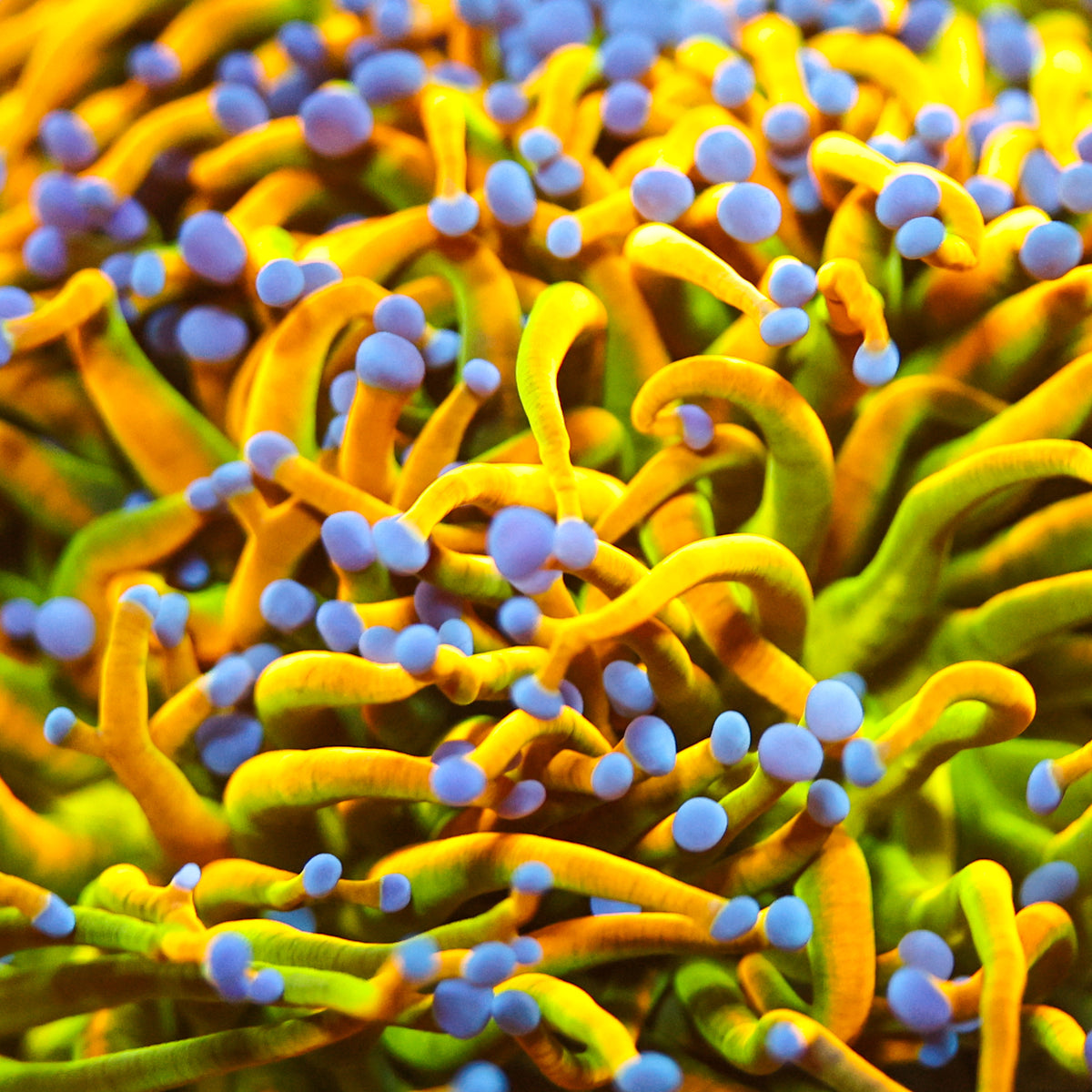
Euphyllia can tolerate a broad lighting range of approximately 100–300 PAR once properly acclimated. Many specimens settle comfortably around 100–150 PAR, but the correct level depends on the coral’s previous conditions and its response.
- Introduce stronger light gradually.
- Avoid placing newly delivered Euphyllia immediately under intense lighting.
- Excessive light can cause retraction, fading or bleaching, particularly without acclimation.
- Increase light slowly if colour or extension suggests the coral needs more energy.
02 · MOVEMENT
Water Flow
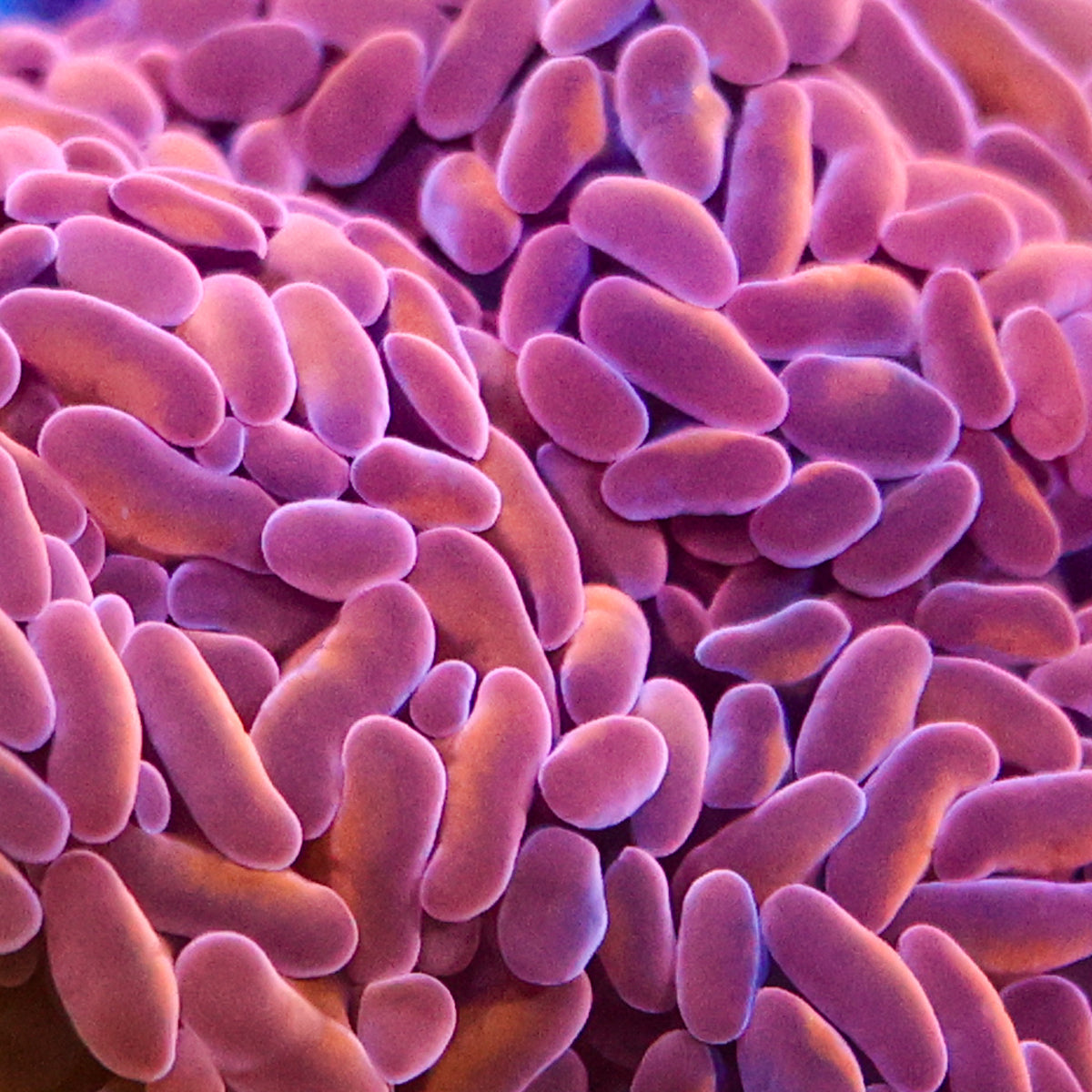
Aim for moderate, indirect and varied flow. The tentacles should sway naturally rather than being pushed hard in one direction or whipped around.
Think of the fleshy tissue like a sail: it should move with the current rather than being pinned backwards against the sharp skeleton beneath. Excessive flow can damage tissue, while insufficient movement can allow detritus to collect around the colony.

03 · POSITION
Placement
Place Euphyllia on stable rockwork, shelves or ledges where they receive suitable light and indirect flow. In a high-light system, middle to lower areas are often ideal; in a lower-light aquarium, a middle or higher position may be more suitable.
- Leave room for the polyps to expand without rubbing against rockwork.
- Secure branching varieties firmly and avoid touching or crushing the flesh.
- Allow for future growth as new heads develop.
- Account for longer reach and sweeper activity after lights out.
04 · SPACE
Compatibility & Coral Aggression
Euphyllia contain powerful stinging cells and can damage neighbouring corals. Hammer and Frogspawn often tolerate one another, while Torches may tolerate other Torches, although individual colonies can still behave differently.
Keep Torches away from Hammer and Frogspawn where possible. Give every colony generous space for daytime expansion, longer night-time reach and future growth rather than assuming similar-looking Euphyllia can safely touch.
05 · THE PRIORITY
Stability
Avoid rapid changes in alkalinity, salinity, temperature, light and nutrient availability. Euphyllia build a calcium carbonate skeleton, so stable alkalinity and calcium are particularly important, but consistency matters more than forcing a precise number.
- Keep nitrate and phosphate measurable rather than stripping the aquarium excessively.
- Handle the fleshy tissue as little as possible.
- Inspect the flesh band and exposed skeleton regularly.
- Change one factor at a time and allow the coral time to respond.
06 · NUTRITION
Feeding & Nutrition
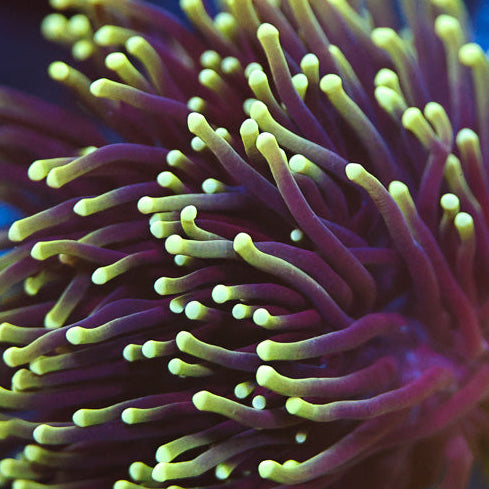
Euphyllia receive much of their energy from their photosynthetic symbionts and do not require target feeding to thrive. Occasional small feeds can support growth if you choose to offer them, but feeding is optional rather than essential.
Suitable foods may include:
- mysis shrimp;
- small pieces of meaty marine food;
- zooplankton;
- fine particulate coral foods; and
- specialised LPS foods.
Offer only small portions that the coral can handle easily. Avoid oversized meals and excessive feeding, and watch the aquarium’s nutrient and algae response.
07 · IDENTIFICATION
Common Euphyllia Types
Torch Coral
Torch corals have long individual tentacles with rounded or slightly pointed tips. They are available in spectacular combinations of green, gold, yellow, purple, blue and other fluorescent colours. Torches are generally the most aggressive of the common Euphyllia groups and require generous space.
Hammer Coral
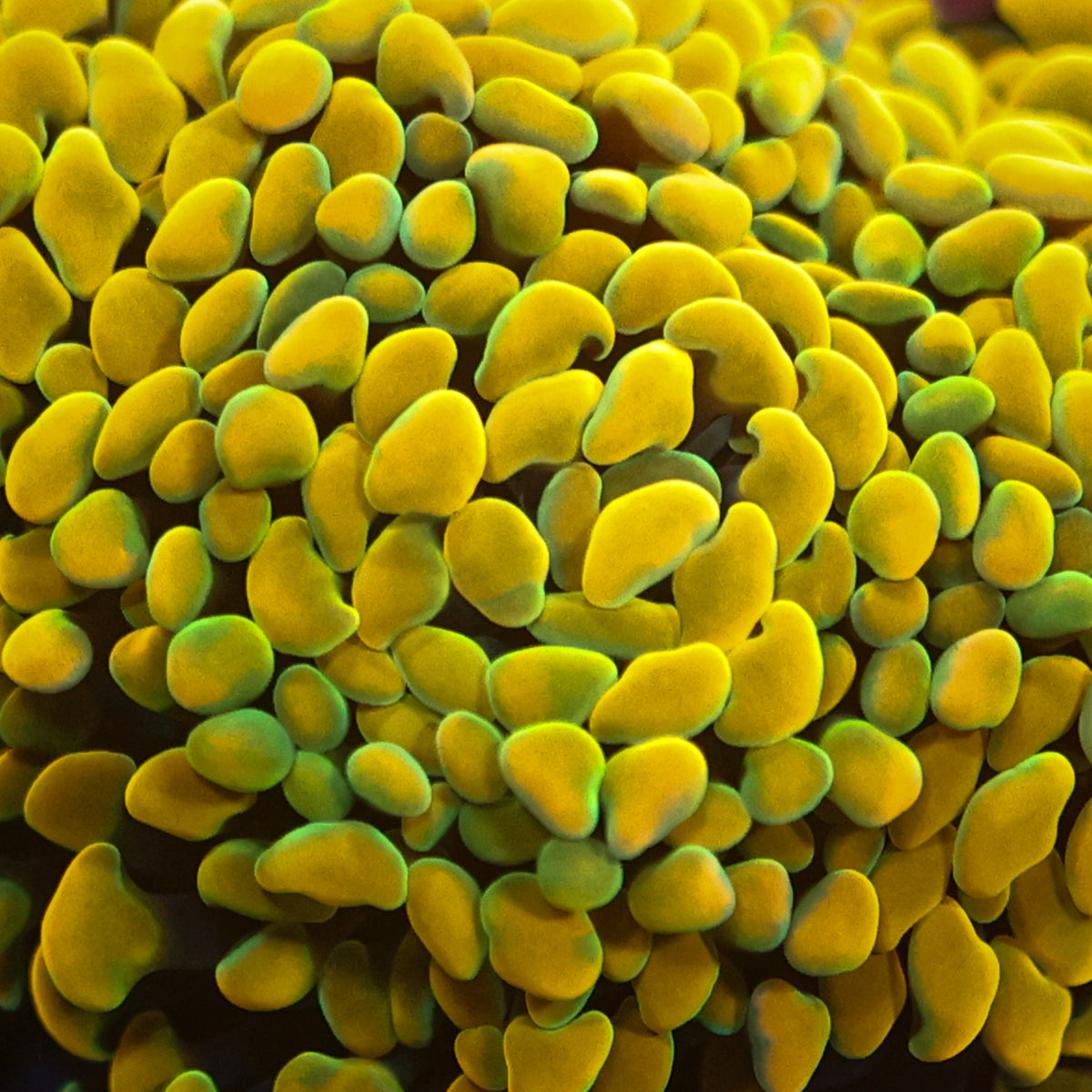
Hammer corals are recognised by their hammer, anchor or T-shaped tentacle tips. They occur in branching and wall-forming growth patterns and usually suit moderate lighting with gentle, varied movement.
Frogspawn Coral
Frogspawn corals have tentacles that divide into multiple rounded tips, creating their characteristic clustered, bouncy appearance. Their large fleshy polyps provide excellent movement under indirect flow.
READING THE CORAL
Signs of a Healthy Euphyllia
- Large, well-inflated polyps and good tentacle extension.
- Natural movement without the tissue being pinned or folded against the skeleton.
- Strong, stable colour and intact tissue.
- A substantial, healthy flesh band extending down around the skeleton.
- New heads developing as the colony grows.
- A feeding response when suitable food is offered.
- A gradual return to normal expansion after shipping, handling or relocation.
A strong flesh band is particularly important. When choosing a specimen, look for healthy tissue extending down around the skeleton rather than ending abruptly close to the head.
PAUSE AND INSPECT
Warning Signs
- Persistent retraction or a clear reduction in normal expansion.
- A shrinking flesh band, tissue recession or newly exposed white skeleton.
- Brown jelly-like material or tissue deteriorating rapidly.
- Bleaching, significant colour loss or sudden darkening.
- Torn tissue or flesh being forced against the skeleton by excessive flow.
- Damage from neighbouring corals or repeated contact with rockwork.
- Algae establishing on exposed skeleton.
- Localised closure, irritation or signs of Euphyllia-eating flatworms or other pests.
Rapid tissue deterioration should be addressed promptly, especially where a colony contains several heads. Separate obviously affected tissue from healthy heads where this can be done safely, stabilise the coral’s environment and avoid making several unrelated changes at once.
KEEP IT SIMPLE
Common Mistakes
- Putting a newly delivered coral straight under intense light.
- Using direct, relentless flow that presses tissue against the skeleton.
- Placing Torches too close to Hammer, Frogspawn or unrelated corals.
- Not allowing enough space for expansion, sweepers and future growth.
- Handling the fleshy tissue or allowing it to rub repeatedly against rockwork.
- Target-feeding oversized pieces or feeding so heavily that nutrients and algae rise unnecessarily.
- Moving the coral repeatedly before it has had time to settle.
- Ignoring a shrinking flesh band, exposed skeleton or rapidly deteriorating tissue.
Stability Creates Colour
The best Euphyllia colour and extension come from consistency. Keep the coral in a sensible light and flow range, maintain stable water chemistry and make adjustments slowly. A settled coral with healthy tissue will show you whether the position is working.
Christian’s Take
Christian’s Take
Euphyllia are a favourite with newer hobbyists because they offer huge visual impact, flowing movement and incredible colour without requiring Acropora-level husbandry. In my tanks, I favour steady mid-level positions with good indirect flow and plenty of room around each head. Torches especially—give them space to move and they’ll reward you. I focus on long-term stability, not quick fixes.
COMMON QUESTIONS
Euphyllia FAQs
How should I choose a Torch coral?
Pay close attention to the flesh band around the skeleton. A healthy, established Torch should have good tissue extending down around the skeleton rather than ending abruptly close to the head. Fresh imports can arrive with very little flesh band, leaving the coral more vulnerable to rapid tissue problems, including Brown Jelly Disease (BJD). Where possible, favour aquacultured or well-established specimens that have healed, settled and developed a strong flesh band.
Can Euphyllia touch each other?
Hammer and Frogspawn will often tolerate one another. Torches can often be placed with other Torches, although individual colonies can still behave differently. Keep Torches away from Hammer and Frogspawn where possible, and always leave enough space for full expansion and night-time reach.
Why isn’t my Euphyllia extending?
Check flow, lighting, parameter stability, recent handling or movement, neighbouring corals, pests and any signs of tissue recession. Avoid changing several things at once. Correct obvious problems gradually and allow the coral time to respond.
Do I need to feed Euphyllia?
No. Target feeding is not essential for Euphyllia to thrive. Occasional small feeds may support growth if you choose to offer them, but avoid oversized food and excessive feeding.
NEXT STEP
Ready to Add Some Movement to Your Reef?
Looking for an established, aquacultured Euphyllia with a strong flesh band and settled behaviour? Explore our current Signature Frags Euphyllia collection.